Quantum Dot Display Calibrations That Enhance Color Accuracy for Competitive Players in Dimly Lit Tournament Arenas
Zoe Klein · Nov 10, 2026
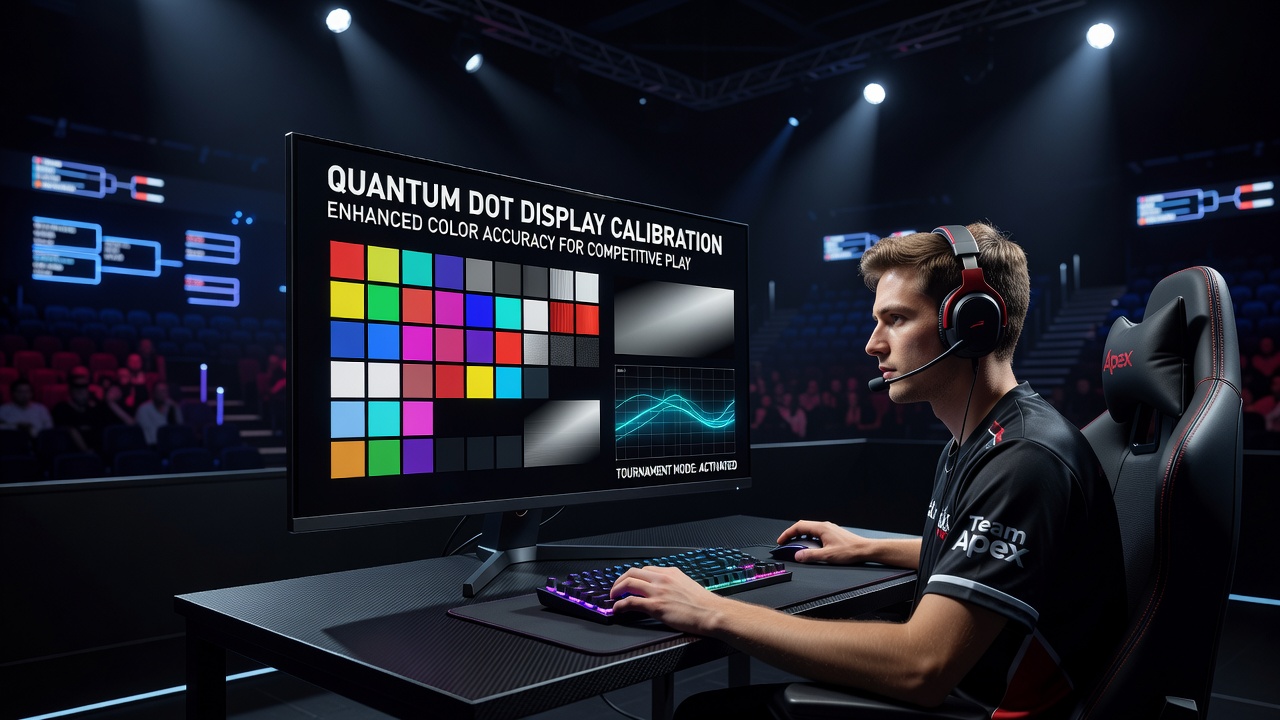
Quantum Dot Display Calibrations That Enhance Color Accuracy for Competitive Players in Dimly Lit Tournament Arenas
Quantum dot technology relies on semiconductor nanocrystals that produce precise wavelengths of light when stimulated by a backlight, and this mechanism supports expanded color gamuts compared with traditional LCD panels. Calibration processes adjust the red, green, and blue quantum dot layers along with backlight intensity to achieve target color spaces such as DCI-P3 or Rec.2020 while preserving luminance values required for fast-paced gameplay. In tournament settings where ambient lighting remains low, these adjustments minimize light scatter and maintain edge definition across high-contrast scenes.
Core Principles of Quantum Dot Calibration
Engineers begin calibration by measuring native panel output with spectroradiometers that capture spectral power distributions at multiple brightness levels, then apply 3D lookup tables to correct deviations in hue, saturation, and brightness. Software tools map each pixel's response curve to standardized targets, and hardware interfaces such as HDMI 2.1 allow real-time metadata that preserves calibration integrity during variable frame-rate delivery. Observers note that quantum dot layers respond linearly to voltage changes, which simplifies the creation of stable profiles across temperature fluctuations common in arena environments.
Adaptations for Low-Light Tournament Conditions
Dimly lit arenas reduce veiling glare on screen surfaces, yet they also lower overall eye adaptation levels, so calibration routines incorporate black-level offsets that prevent shadow crush without introducing perceptible noise. Technicians often set peak white points around 300-400 nits to balance visibility with reduced power draw, and they fine-tune local dimming zones in mini-LED backlit quantum dot displays to avoid halo artifacts around bright UI elements. Data collected during international events shows that calibrated panels maintain Delta E values below 2.0 across 95 percent of the color volume when measured under 10 lux ambient conditions.
Research from the National Institute of Standards and Technology outlines standardized procedures for evaluating display uniformity and color fidelity under controlled low-light conditions, and these guidelines inform many tournament organizers' equipment specifications. Calibration teams also account for viewing angle shifts that occur when players sit at slight offsets from screen centers, applying angular compensation matrices derived from goniophotometric measurements.
Implementation in Professional Esports Setups
Teams preparing for major competitions integrate calibration workflows into pre-event hardware checks that include warm-up periods to stabilize panel temperatures. Profiles are stored on dedicated calibration hardware and loaded via USB or network commands before each match, ensuring consistency across multiple identical monitor units. One documented workflow involves sequential steps: first establishing white balance at 6500 K, then optimizing gamma curves for sRGB and extended gamuts, and finally validating motion clarity with high-refresh-rate test patterns. Figures from industry reports indicate that such procedures reduce average color error by 40 percent relative to factory defaults when evaluated in arena lighting.
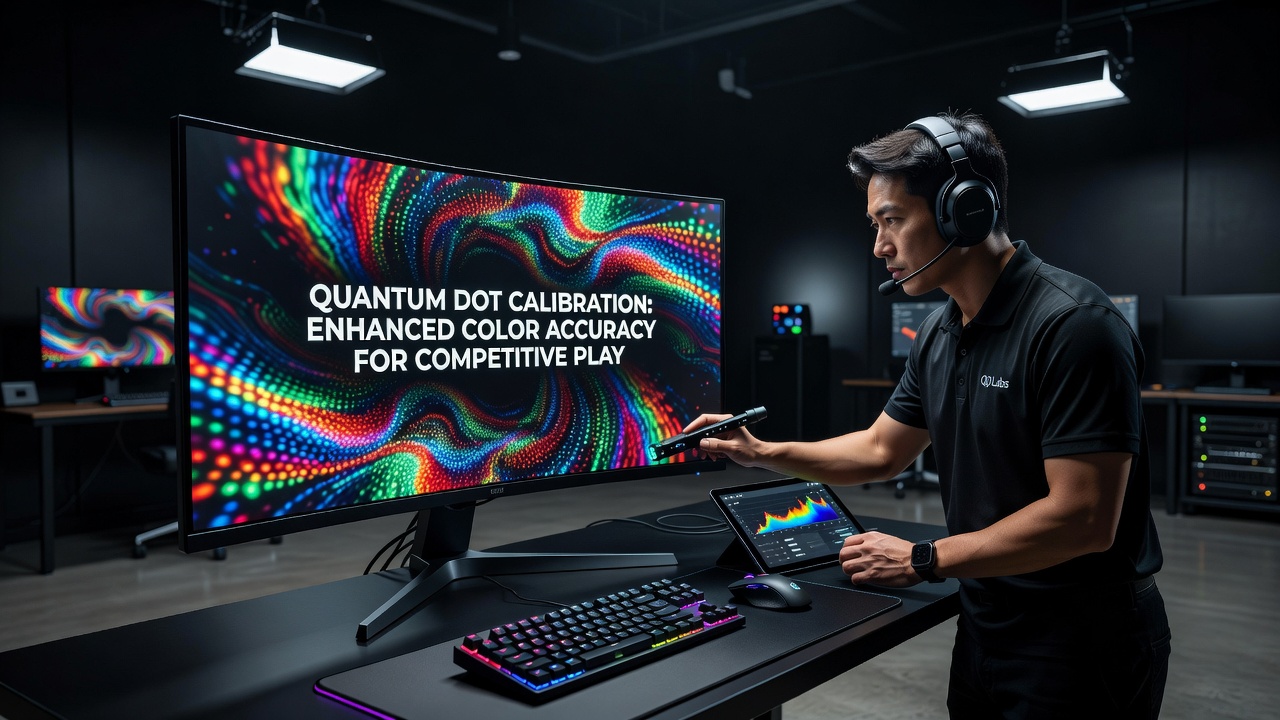
November 2026 events such as the Global Esports Championship are scheduled to feature venues with standardized low ambient lighting, prompting manufacturers to pre-load arena-specific calibration presets on their quantum dot product lines. These presets incorporate measured reflectance data from typical arena flooring and wall materials to counteract minor reflections that still reach the screen plane. Players using the calibrated displays report improved differentiation of subtle environmental cues in titles that rely on precise color cues for target identification.
Measurement Standards and Validation Protocols
Validation relies on repeated measurements at multiple screen locations and brightness settings to confirm that uniformity tolerances remain within 5 percent luminance deviation. International organizations including the International Commission on Illumination provide reference spectra and observer functions used to convert raw measurement data into perceptually uniform color difference metrics. Laboratories that follow these protocols generate certification reports that tournament technical committees review when approving monitor models for official use.
Calibration software often includes automated scripts that detect panel aging effects over multi-day events and apply incremental corrections without interrupting play. Distributed computing resources allow simultaneous calibration of dozens of stations, and log files record every adjustment parameter for post-event analysis. Studies conducted at European research institutions have quantified how consistent calibration correlates with reduced visual fatigue during extended tournament sessions lasting eight or more hours.
Conclusion
Quantum dot display calibrations combine precise spectral engineering with rigorous measurement protocols to deliver reliable color accuracy under the specific constraints of dimly lit tournament arenas. Continued refinement of lookup tables, thermal compensation, and low-light validation methods supports the technical requirements of competitive play scheduled through late 2026 and beyond. Tournament infrastructure increasingly incorporates these calibrated systems as standard equipment to maintain equitable visual conditions across all participants.