Distributed Computing Networks Supporting Real-Time World Simulation in Massively Multiplayer Environments
Devon Bennett · Oct 13, 2026
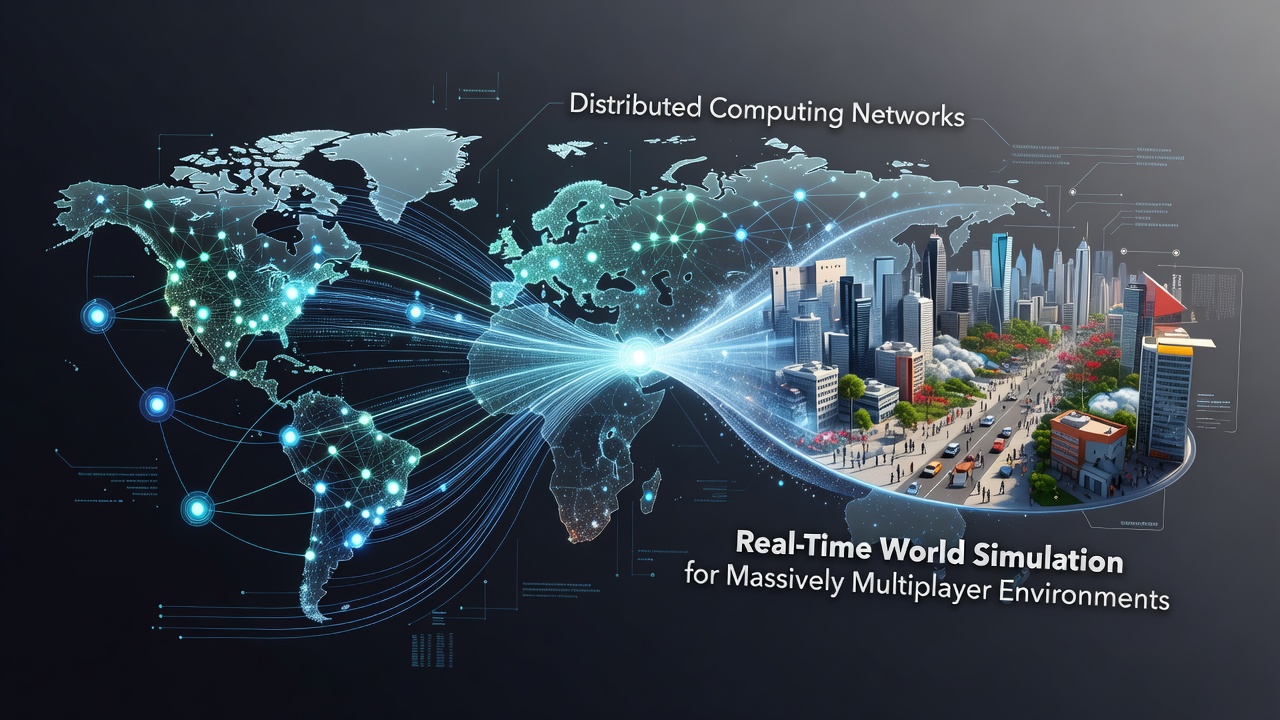
Distributed Computing Networks Supporting Real-Time World Simulation in Massively Multiplayer Environments
Distributed computing networks form the backbone for real-time world simulation in massively multiplayer environments, where thousands of users interact simultaneously within persistent virtual spaces. These systems partition computational workloads across multiple nodes, allowing dynamic updates to game states such as player positions, environmental changes, and object interactions without centralized bottlenecks. Data from industry deployments shows that such networks maintain synchronization through protocols that propagate changes at sub-second intervals, supporting simulations that scale to tens of thousands of concurrent participants.
Core Architecture of Distributed Systems in Multiplayer Simulations
Engineers design these architectures around node clusters that handle specific simulation regions, often called shards or zones, while a global coordinator manages cross-region consistency. Each node processes local physics calculations, AI behaviors, and state replication, then exchanges delta updates with peer nodes using reliable multicast or publish-subscribe mechanisms. Observers note that this division reduces latency for nearby players because computation stays geographically closer to the action, whereas distant events receive lower-priority synchronization. Research from the National Science Foundation highlights how latency-sensitive tasks like collision detection run on edge nodes, while long-term world persistence relies on replicated databases spread across data centers.
Load balancing algorithms continuously monitor node utilization and migrate simulation responsibilities during peak activity, such as large-scale events in October 2026 that drew record player counts. These migrations occur through state serialization techniques that transfer active entities without interrupting ongoing interactions, preserving continuity for participants.
Real-Time Synchronization Mechanisms
Synchronization in these environments depends on interest management systems that filter updates so each client receives only relevant data about nearby entities and events. Distributed networks implement spatial partitioning trees or visibility graphs to determine relevance, then route packets through dedicated simulation servers rather than a single authority. Studies indicate that predictive algorithms extrapolate entity trajectories during brief network delays, correcting discrepancies once authoritative updates arrive. This approach keeps perceived consistency high even when individual nodes experience variable load.
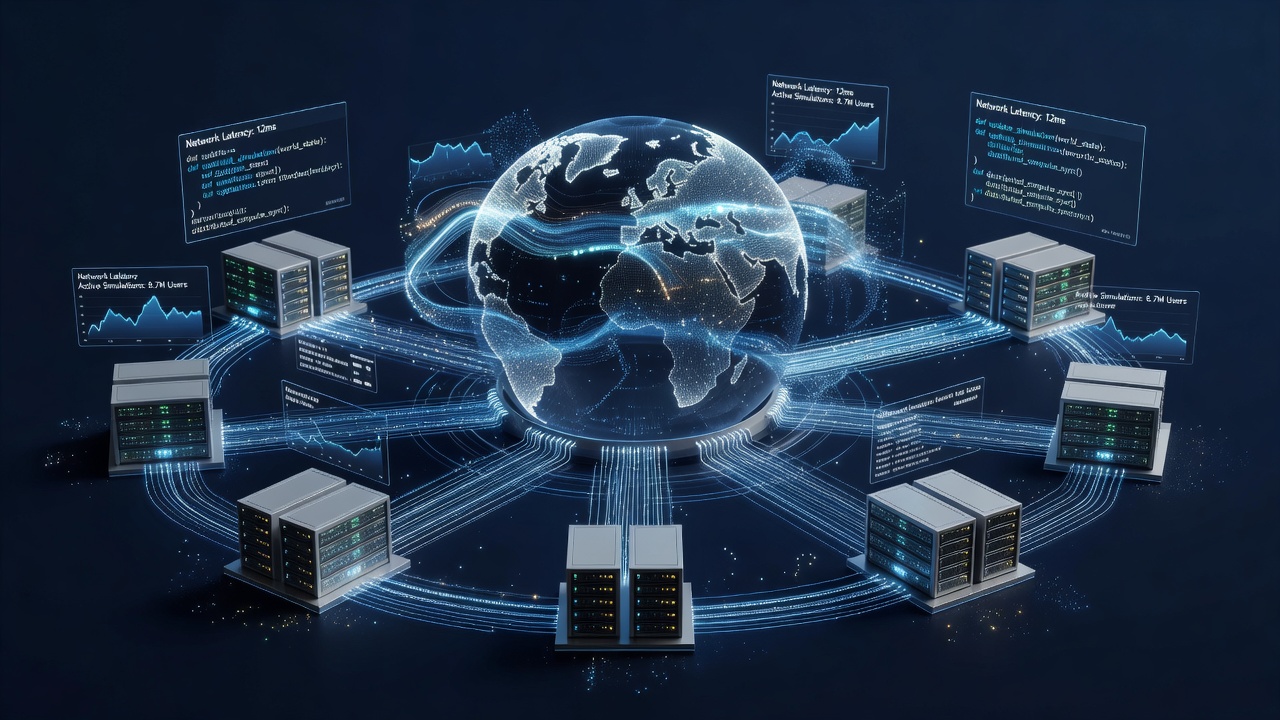
Clock synchronization protocols such as variations of NTP or specialized game-oriented time services align simulation ticks across nodes, enabling coordinated actions like simultaneous ability activations. When discrepancies arise, rollback mechanisms revert affected states and re-execute with corrected inputs, a process documented in technical papers from academic research groups. A report by the European Commission on digital infrastructure notes that these rollback events remain rare in production deployments because predictive buffering absorbs most timing variances.
Scalability Challenges and Mitigation Strategies
Scaling real-time simulations introduces challenges around bandwidth consumption and state consistency as player numbers grow. Distributed networks address bandwidth through compression of state deltas and prioritization of critical updates, while consistency relies on eventual convergence models rather than strict ACID guarantees. One study revealed that games employing hierarchical authority, where regional masters defer to global arbiters only for conflicts, achieve higher throughput than fully peer-to-peer alternatives. Those who've analyzed production logs often discover that network partitions trigger graceful degradation, with isolated regions continuing local simulation until reconnection restores global coherence.
Security considerations include verification of state changes to prevent cheating through spoofed updates, typically handled via cryptographic signatures and server-side validation distributed across nodes. Resource allocation shifts dynamically based on demand forecasts derived from historical patterns, ensuring capacity for unexpected spikes without over-provisioning during quieter periods.
Case Examples from Current Deployments
Several large-scale titles demonstrate these principles in operation, partitioning continents or solar systems across dedicated server fleets that communicate through high-speed backbones. In one documented implementation, simulation of weather systems and ecosystem changes runs on separate compute pools that feed results into the primary player-interaction layer. Data shows average update latencies under 50 milliseconds for intra-region actions, rising modestly for inter-region events due to routing overhead. Developers integrate monitoring dashboards that track node health and trigger automated scaling when utilization crosses defined thresholds.
Conclusion
Distributed computing networks continue to evolve methods for handling the computational intensity of real-time world simulation, integrating advances in networking hardware and consensus algorithms to support ever-larger player bases. Ongoing deployments in 2026 reflect refinements in partitioning logic and state management that keep simulations responsive across global audiences.