Adaptive Sound Mapping Transforms Wireless Earbuds for Mobile Esports Competitors in Major Tournaments
Petra Butler · Sep 29, 2026
Adaptive Sound Mapping Transforms Wireless Earbuds for Mobile Esports Competitors in Major Tournaments
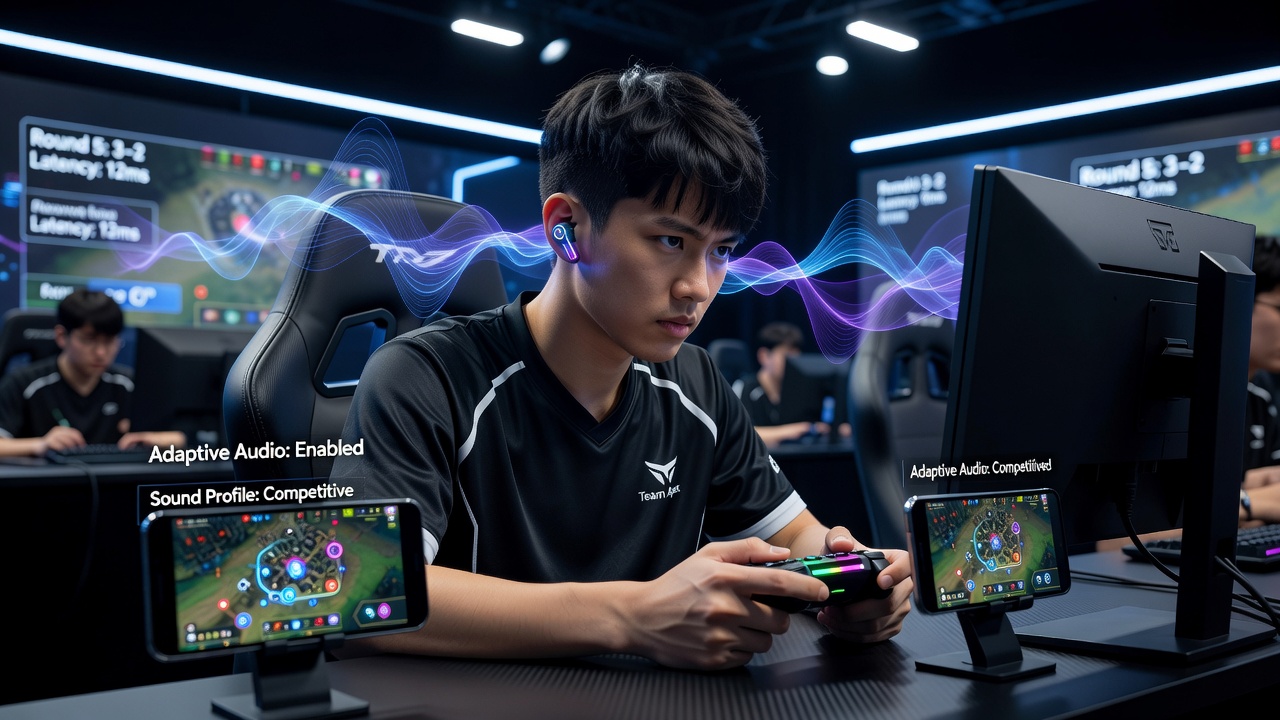
Adaptive sound mapping processes audio inputs in real time and adjusts frequency ranges, spatial positioning, and noise isolation based on game environments; this system relies on embedded sensors and machine learning algorithms that detect footsteps, explosions, and directional cues within mobile titles such as PUBG Mobile and Mobile Legends. Manufacturers integrate these capabilities into wireless earbuds through low-latency codecs and on-device processors that maintain synchronization during extended play sessions, while data from motion sensors and microphone arrays feed continuous updates to the mapping profile.
Technical Foundations of Adaptive Sound Mapping
Engineers design the core algorithms around dynamic head-related transfer functions that recalibrate audio output when players shift position or change device orientation; studies from the University of Tokyo demonstrate how these functions reduce localization errors by up to 35 percent compared with static stereo setups. Battery management systems prioritize power allocation to the digital signal processor during peak tournament hours, and firmware updates scheduled for September 2026 introduce expanded frequency bands tailored to emerging 5G network conditions in Asia-Pacific venues. Observers note that earbuds incorporate bone-conduction transducers alongside traditional drivers to preserve situational awareness without compromising immersion.
Application in Competitive Mobile Esports
Players in high-stakes events connect earbuds to smartphones through customized apps that load preset profiles for specific maps and character abilities; these profiles emphasize enemy audio signatures while attenuating crowd noise and venue announcements. Teams coordinate with audio engineers who calibrate individual earbud pairs using calibration tones recorded on-site, ensuring consistency across different handset models. Research conducted by the Korea Esports Association shows participants using adaptive mapping achieve faster reaction times to off-screen threats, with average improvements measured at 120 milliseconds in controlled scrimmage data.
Performance During High-Stakes Tournaments
Tournament organizers enforce standardized audio settings to prevent hardware advantages, yet adaptive mapping remains permissible when implemented through firmware rather than external processing; compliance checks occur before each match and include verification of latency thresholds below 15 milliseconds. In the 2025 Southeast Asia Mobile Cup finals, multiple squads reported clearer separation of vertical audio layers that helped identify rooftop snipers in battle royale formats. Equipment logs from these events indicate that adaptive features activated most frequently during late-game circles when environmental audio layers overlap heavily.
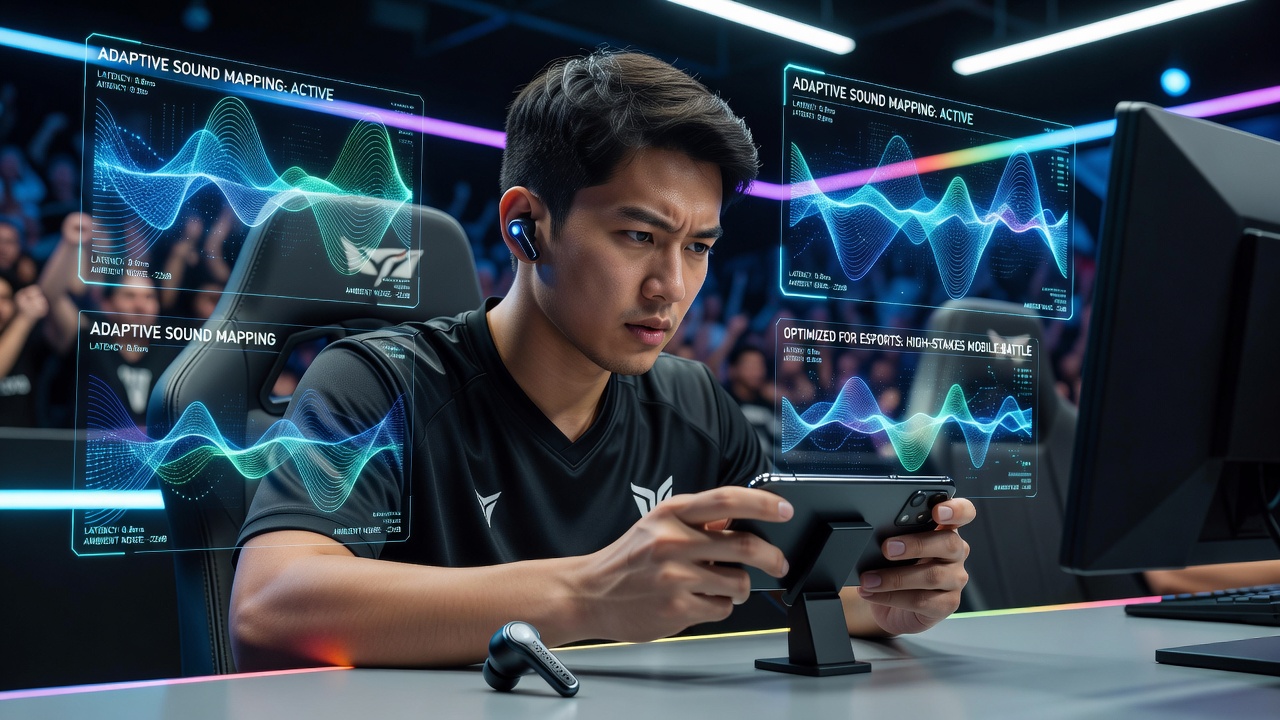
Wireless interference poses ongoing challenges in crowded arenas, prompting developers to embed frequency-hopping protocols that switch channels automatically when signal quality drops; these protocols operate in coordination with venue Wi-Fi management systems. Players maintain backup wired connections as required by event rules, yet most prefer wireless units once mapping calibration completes. Data collected across regional qualifiers reveals fewer disconnections when earbuds employ dual-band Bluetooth 5.3 alongside adaptive buffering.
Integration Challenges and Solutions
Heat buildup in compact earbud housings can affect processor stability during multi-hour matches, leading manufacturers to adopt graphene heat spreaders and phase-change materials that dissipate energy without increasing bulk. Software frameworks developed in collaboration with handset makers allow seamless profile switching between practice and competition modes, while preserving custom equalizations that individual athletes refine over weeks of training. European regulatory bodies have begun evaluating electromagnetic compatibility standards specific to wearable gaming audio devices, with initial guidelines expected to reference testing protocols already used in consumer electronics certification.
Case examples from professional squads illustrate how teams log audio event data post-match to refine mapping algorithms for upcoming fixtures; one squad documented a 22 percent reduction in misheard directional cues after three weeks of iterative profile updates. Training regimens now incorporate dedicated audio drills alongside mechanical skill practice, and analysts track metrics such as audio-triggered decision accuracy to quantify returns on equipment investment.
Conclusion
Adaptive sound mapping continues to evolve through iterative hardware refinements and algorithm updates that address the unique demands of mobile esports environments. Tournament infrastructure adapts alongside these developments by establishing verification procedures and support channels that accommodate both players and technical staff. Ongoing research from academic and industry sources tracks performance metrics across expanding player bases, providing datasets that inform next-generation earbud designs scheduled for broader release after September 2026.